MentalHealthCE Login


| Login | ||

Healthcare Training Institute - Quality Education since 1979
CE for Psychologist, Social Worker, Counselor, & MFT!!

Section 19
Adult
Survivors: Ethics, Boundary Dynamics and Treatment
Question 19 | Test | Table of Contents
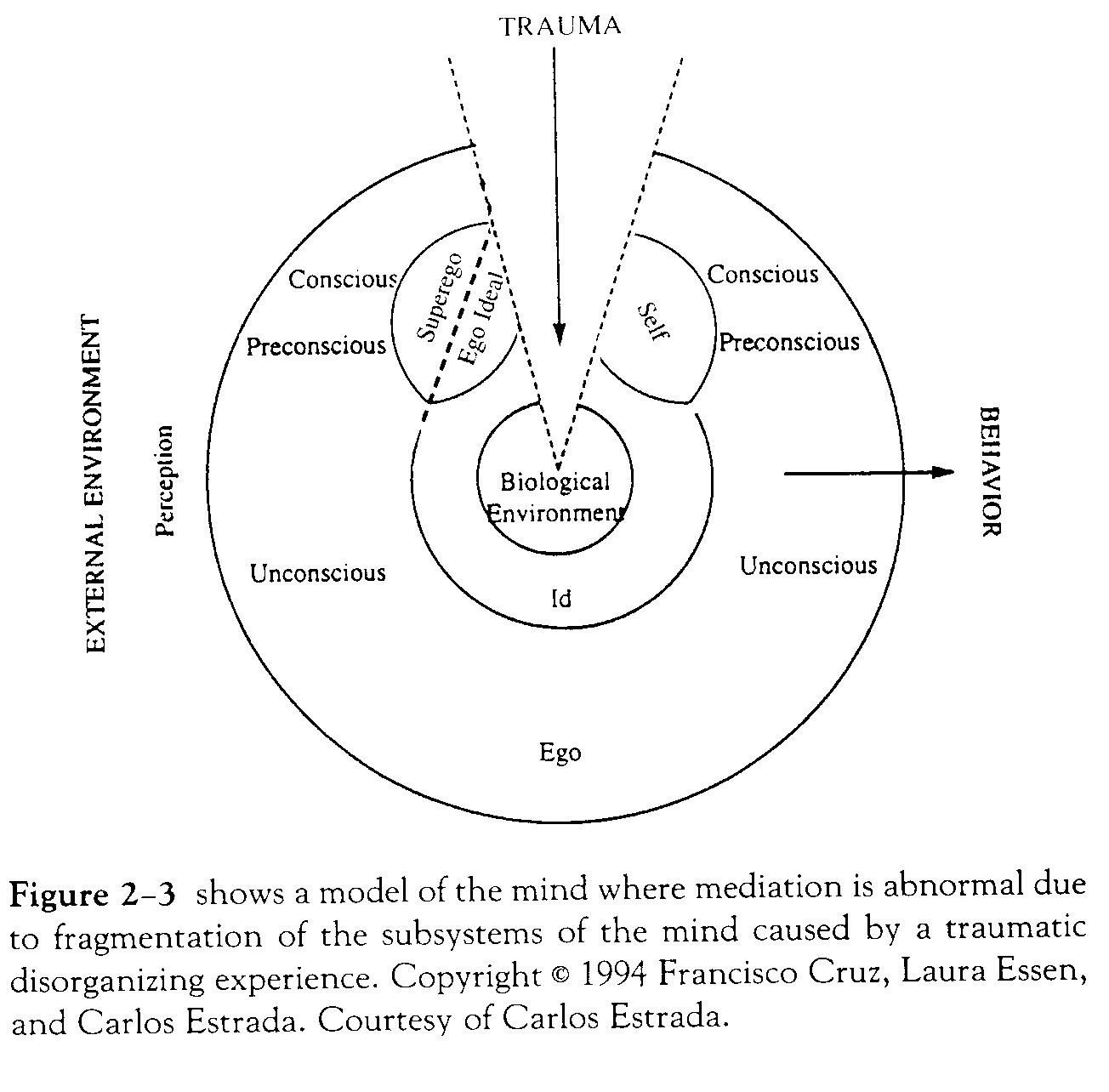
Figure 2-3 illustrates how pervasive and fragmenting a trauma can
be to the mental apparatus, affecting different mental structures. As shown, fragmentation
of the superego and the ego ideal might be such that it results in a lack of regulation
of self-esteem, a tendency to self-blame, and a variety of clinical symptoms such
as depression, rigidities, and inhibitions, which frequently are related to superego
and ego ideal system dysfunctions. By cutting across the conscious layer of the
mind, the trauma as illustrated would contaminate primary and secondary process
thinking; indeed, the patient may experience uncontrollable aggressive and/or
libidinal impulses coming from the repressed, idrelated layer of the mind.
Overall, a variety of clinical symptoms, depending on which structure of the mind was more severely affected, should be expected. Generally, the pockets of dysfunction should be readily identifiable through the evaluation process. The maladaptive or symptomatic behavior observable in the clinical situation may impact different spheres of the mind including the biophysical, intrapsychic, interpersonal, intrafamilial, and social and cultural, as illustrated in Figure 2-4. How the individual copes with unpredictable external circumstances will also be affected by a traumatic event. The treatment modality to be used to correct the structural deficit or dysfunction would have to address the specific areas of the mind that have been affected. The treatment interventions would have to match the area of major dysfunctions. In general terms, this requires a combination of treatment modality that may go from the use of medication to individual, couples, group, or family therapy.

1. Biophysical. This assessment examines biological/physical systems and what they may contribute to the patient's current dysfunction. Is there any genetic predisposition to emotional disorder, such as a history of bipolar illness or schizophrenia among the patient's relatives? Is there any concurrent physical disorder that may be contributing to emotional distress (physical deformity, endocrine disorder, and so on)? The clinician should have an idea about how instinctual drives (libido, aggression, self-preservation) are handled by the individual.
2. Intrapsychic. The subject of this assessment would be the mind itself, which includes intelligence, perception, identity, control, memory capacity, and so on. These are areas that should be evaluated.
3. Interpersonal. This area deals with how the individual relates, for example, to others, to self, to authority; the quality of object relationships, which includes relating to things, and to animals.
4. Group/Family. Questions commonly asked are, What role(s) does the individual take in groups? Is he a leader or a follower? Does he associate or is he usually isolated? How does he function in the matrix of the family and family dynamics? What are the childrearing practices in his family? What roles does he play in the family? What is the quality of those roles?
5. Social. Issues about the individual's social stratum, roles, and relationships are important to clarify. What is the patient's experience with interracial and intergenerational relationships? How does the patient relate with different age groups and in sexual relationships?
6. Cultural. Belief systems, language problems, ethnicity, religious ideas, ethics, and moral values are also important areas to be assessed.
The goal of a comprehensive clinical
assessment is to clarify how the traumas have altered or impacted any of these
areas of functioning. The objectives and methods of treatment and intervention
should be based on all the variables mentioned above, always attempting to keep
an integrated view of the individual.
- Cruz, Francisco, & Laura Essen,
Adult Survivors of Childhood Emotional, Physical, and Sexual Abuse: Dynamics and
Treatment, Jason Aronson, Inc.: New Jersey, 1994.
Personal
Reflection Exercise #5
The preceding section contained information
about dynamics and treatments for the adult survivor. Write three case study examples
regarding how you might use the content of this section in your practice.
Update
Association of Adverse Childhood
Experiences and Social Isolation with Later-Life
Cognitive Function Among Adults in China
Lin, L., Cao, B., Chen, W., Li, J., Zhang, Y., & Guo, V. Y. (2022). Association of Adverse Childhood Experiences and Social Isolation With Later-Life Cognitive Function Among Adults in China. JAMA network open, 5(11), e2241714. https://doi.org/10.1001/jamanetworkopen.2022.41714
Peer-Reviewed Journal Article References:
Assink, M., van der Put, C. E., Meeuwsen, M. W. C. M., de Jong, N. M., Oort, F. J., Stams, G. J. J. M., & Hoeve, M. (2019). Risk factors for child sexual abuse victimization: A meta-analytic review. Psychological Bulletin, 145(5), 459–489.
Hayes, J. A., Gelso, C. J., Goldberg, S., & Kivlighan, D. M. (2018). Countertransference management and effective psychotherapy: Meta-analytic findings. Psychotherapy, 55(4), 496–507.
Webster, G. (2018). Psychoanalytic complexity theory: An application to the treatment of child sexual offenders. Psychoanalytic Psychology, 35(1), 83–92.
QUESTION
19
What are the three factors upon which ego weakness depends? To select and enter your answer go to Test.